


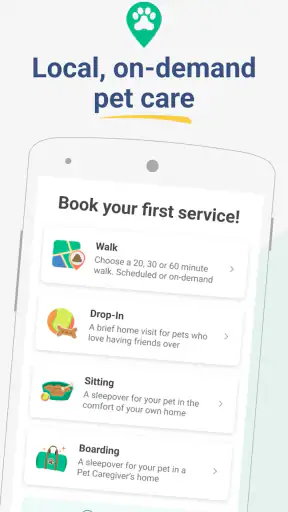
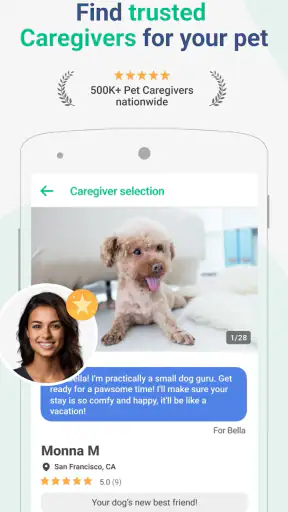
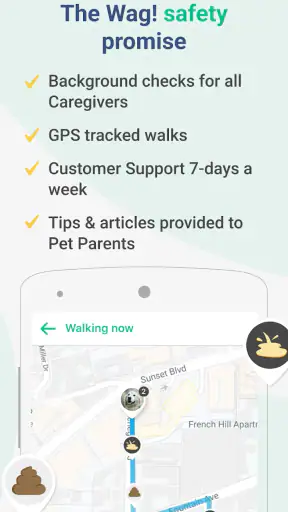
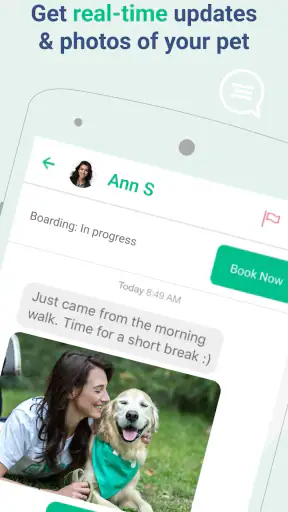
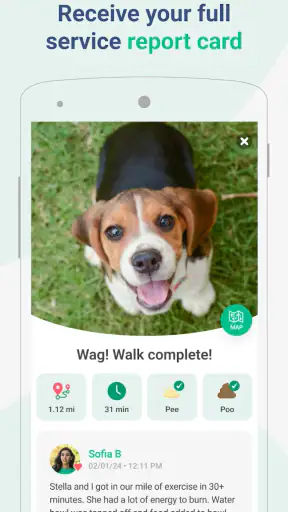
Finding dependable care for a dog is rarely as simple as opening a calendar and choosing a time. Walks, sitting, boarding, training, and veterinary questions all come with different levels of urgency, and the wrong choice can create stress for both you and your pet. I spent time looking at how Wag! - Dog Walkers & Sitters fits into that everyday problem, and my impression is that it works best as a flexible local-services app rather than as a complete replacement for a long-term relationship with one trusted caregiver.
Developed by Wag Labs, Inc., this free Travel & Local app brings several dog-care needs into one place. Its audience is broad: busy owners who need a walk while they are at work, travelers arranging care away from home, people comparing sitting and boarding options, and owners who want access to training or remote veterinary care. The app is rated for Everyone, and its current version is 3.117.2 for devices running iOS 11 or later.
What matters most in practice is not simply how many services appear on the screen. It is how quickly I can turn a vague need into a clear request, how much confidence I have in the person or service involved, and how well the app behaves when I am already in a hurry. On those points, Wag! has useful strengths, but it also asks the owner to stay involved instead of treating booking as a completely hands-off process.
How Wag! feels when I need help quickly
Fast enough for planned walks, less predictable for urgent care
The main speed advantage is having several types of care organized in one app. If I know that my dog needs a walk during a long workday, I can begin with the service that matches the situation instead of searching separately through local listings, messaging individual providers, and switching between unrelated platforms. That reduction in searching is valuable, especially when the request is routine.
I would be more cautious about treating it as an emergency solution. A dog that needs immediate medical attention should not be placed behind an app-based booking process, and a last-minute boarding request may depend heavily on local availability. The app can help me start arranging care, but it cannot remove the practical limits of distance, timing, provider availability, or the particular needs of my dog.
My best speed tip is to prepare before the busy moment. I would review the dog’s routine, access instructions, feeding details, and behavior notes in advance, then keep the request focused. A clear description is not just polite; it can reduce back-and-forth and make it easier for a caregiver to decide whether the booking suits them. This is one of the less obvious advantages of using a dedicated service app: the planning information is connected to the care request instead of being scattered across text messages.
A useful workflow for a normal workday
Imagine I have meetings throughout the afternoon and my dog cannot wait until evening. I would open Wag!, choose a walking service, check the available options in my area, and provide the practical details a caregiver needs to arrive and handle the dog safely. I would then use the app as the central place for the arrangement rather than relying on a casual message to a neighbor whose schedule may change.
That workflow is especially helpful for people who live alone or work irregular hours. It also suits owners who are new to a city and do not yet have a reliable local network. The convenience is not that every request becomes instant; it is that the first step is clearer and more structured than asking around from scratch.
For recurring needs, I would still compare the app with building a direct relationship with a local walker. A familiar person may understand a dog’s habits better and may be easier to reach informally. Wag! is more attractive when I value discovery, organization, and access to several kinds of care over the simplicity of one established person.
Where the app may feel heavier
When I move beyond a straightforward walk, the decision process naturally becomes more involved. Sitting, boarding, training, and remote veterinary care are not interchangeable services, so I need to read carefully and make sure I am requesting the right kind of help. That extra choice is useful, but it can make the app feel slower than a single-purpose walking service.
The same is true when a dog has unusual needs. A nervous rescue dog, a senior pet, or a dog that cannot live with other animals may require more explanation before I feel comfortable booking. In those situations, speed should not be the only goal. I would rather spend a little longer checking suitability than accept the first available option.
What happens during heavier use
Switching between services without losing the bigger picture
One of Wag!’s strongest ideas is the range of care gathered under one account. I can think about a walk on Tuesday, a sitter for a weekend away, training for a behavior problem, or a remote vet conversation without beginning an entirely new search on a different platform. That makes the app more useful for households whose needs change from week to week.
However, broader coverage also means heavier mental use. I need to distinguish between a service that solves a scheduling problem and one that addresses a health or behavior concern. Remote veterinary care, for example, may be convenient for guidance, but I would not confuse it with hands-on examination when a dog is seriously ill or injured. Training can support a plan, but it is not a quick substitute for consistent work at home.
A practical way to avoid confusion is to decide what outcome I need before opening the app. If the goal is exercise, I should focus on a walker. If I will be away overnight, sitting or boarding deserves more attention. If the issue involves health, I should judge remote care by the urgency of the situation rather than by convenience alone. This simple separation makes the multi-service design feel more manageable.
Resource demands during a busy day
I cannot fairly attach a precise battery, storage, or data figure to the experience, because those demands vary with the phone, connection, location, and how often the app is used. In ordinary use, I would expect the busiest moments to come when I am browsing local care, reviewing details, communicating around a booking, or moving through several service categories in one session.
That means the app is not something I would leave open continuously just to monitor it. I would use it when I need to arrange or review care, then close it and return when an action is required. On an older device, keeping the operating system compatible and leaving enough free storage for normal app updates is sensible. The minimum requirement is iOS 11 or later, so owners with very old hardware should check compatibility before depending on it.
My advice for heavy-use days is simple: do the research while the phone has a reliable connection, save the important arrival and care details somewhere accessible, and avoid waiting until the last minute for a complicated booking. That is not a criticism unique to Wag!; it is a sensible habit for any service that coordinates real-world people and animals.
Why multitasking can expose friction
The app is most useful when I have one clear task. If I am simultaneously comparing boarding, checking training help, and trying to arrange a walk for the same day, the experience can feel more demanding because each choice has different questions attached to it. The convenience of one app does not mean every decision is equally quick.
I also would not judge performance only by how rapidly screens appear. A booking app can feel fast while still leaving me uncertain about what happens next. For Wag!, clarity around the request matters as much as movement through the interface. I want to know which service I selected, what information the caregiver needs, and whether I have completed the important step rather than merely viewed an option.
Reliability, trust, and recovering when plans change
A useful organizer, not a substitute for judgment
The app’s real-world reliability depends on more than the software. It also depends on the local care options, the accuracy of the information I provide, the caregiver’s suitability, and the communication around the booking. That is why I see Wag! as an organizer and access point, not as a guarantee that every arrangement will be perfect.
Before accepting care, I would think through details that are easy to overlook: how the dog reacts to strangers, whether there are escape risks, what happens around other dogs, and which routines must not be changed. A short, honest care note is more useful than a vague instruction such as “easygoing.” If a dog has triggers or medication needs, I would make those points clear before relying on a booking.
This is also where the app compares favorably with an informal arrangement, but not always with a long-standing personal caregiver. A friend or familiar local walker may already know the dog’s temperament. Wag! is better when I need a structured way to discover care, especially after moving or when my usual person is unavailable. The trade-off is that I may need to spend more time establishing trust.
Recovery when a booking does not go smoothly
Any service involving schedules can encounter changes. A caregiver may be delayed, a dog may behave differently than expected, or my own plans may shift. My approach would be to keep the relevant booking information and communication inside the app as much as possible, because scattered conversations make it harder to understand what was agreed.
I would also create a backup plan for important trips. For a weekend away, that could mean identifying a second trusted contact before leaving, rather than assuming one app request will solve every problem. For a daily walk, the risk is smaller, but I would still avoid making the arrangement so late that there is no practical alternative.
The recovery question is particularly important for boarding and sitting. A walk is usually a limited visit; overnight care affects feeding, sleep, medication, and the dog’s comfort over a longer period. I would use the app to arrange the service, but I would keep direct, clear instructions and an emergency contact plan ready. That preparation is a stronger reliability measure than simply choosing the first available option.
Remote veterinary care needs sensible boundaries
Remote vet care is a convenient part of the service mix for questions that can be discussed without taking the dog immediately into a clinic. It may help me decide what to monitor or whether a concern deserves professional attention. Its value is greatest when I use it as guidance rather than as permission to ignore worsening symptoms.
If my dog is struggling to breathe, has suffered a serious injury, or shows another urgent warning sign, I would seek immediate in-person veterinary help instead of waiting for an app interaction. This is not a weakness specific to Wag!; it is a basic limit of remote care. The app can widen access to advice, but it cannot physically examine a pet.
Device fit, access, and everyday practicality
Who is likely to get the most from it
I think Wag! is a strong match for urban and suburban dog owners who need occasional flexibility. It is particularly useful for people with changing work schedules, travelers who need sitting or boarding, and new pet owners who want several care categories in one place. The free price also makes it easy to explore without committing to a subscription simply to see whether the service fits a routine.
It can also help households divide responsibilities. One person may handle a weekday walk, another may arrange care for a trip, and both can work from the same general service rather than maintaining separate systems. That convenience becomes more valuable when dog care is shared between people with different schedules.
The broad age rating of Everyone makes the app approachable for a family, although the person arranging care still needs to be responsible for the final decision. An accessible interface does not remove the need to discuss safety, instructions, and who is authorized to make choices for the dog.
Who should consider another approach
I would hesitate to rely on Wag! as the only solution if my dog needs highly specialized handling, has severe aggression, or requires a level of medical supervision that a general local-care marketplace may not be suited to provide. In those cases, a specialist recommended by a veterinarian or an established professional relationship may be the safer choice.
It may also be unnecessary for someone who already has a dependable walker, sitter, and trainer. If the same people know the dog well and scheduling is easy, adding an app can create another layer rather than solving a problem. Wag! earns its place when flexibility and discovery matter more than keeping everything informal.
For device owners, the main practical checkpoint is operating-system support. The app requires iOS 11 or later, so anyone using an older iPhone or an outdated system should verify that the app can be installed and maintained before making it central to a travel plan. I would also keep the phone updated enough to handle ordinary app changes, since service apps tend to evolve over time.
How it compares with familiar alternatives
The usual alternatives fall into three groups: asking friends, hiring a local independent caregiver, or using a single-purpose service. Friends can be inexpensive and familiar, but they may not be available when I need them. An independent caregiver can offer a warmer personal relationship, yet finding the right person and coordinating schedules may take more effort. A single-purpose service may feel simpler when I only ever need walks.
Wag! sits between those choices. It offers more structure than a casual favor and more range than a walking-only tool. Its advantage is convenience across different kinds of care; its disadvantage is that the owner still has to evaluate fit and manage expectations. I would choose it for flexibility, not because it eliminates the human judgment involved in pet care.
My performance verdict after weighing convenience against control
From a performance perspective, I see Wag! as a practical app for focused sessions. It should be approached as a tool for arranging care, reviewing options, and keeping service-related decisions organized, rather than as an app that needs to run constantly in the background. The experience is most efficient when I know what I need and have already prepared the information a caregiver will require.
Its stability in real life is tied to the booking itself. A smooth interface cannot compensate for unclear instructions, unsuitable care, or a last-minute request in an area with limited availability. That is why my strongest recommendation is to use the app early for planned needs and to keep a backup for important arrangements.
The app has a substantial audience, with more than a million installs and an average rating of 4.3 from roughly 9,600 ratings. Those figures suggest that many owners find the concept useful, but they do not replace my own suitability check. A popular service can still be the wrong choice for a dog with specialized needs or for an owner who already has a trusted arrangement.
My honest conclusion is that Wag! is worth trying if I want one free app for local dog walking, sitting, boarding, training, and remote veterinary guidance. I especially like the way it can shorten the search when life becomes unpredictable. I would not use it blindly, and I would not wait until a crisis to learn how it works. The best results come from treating Wag! as a well-organized starting point, while keeping personal judgment, clear instructions, and a backup plan in charge.
For a busy owner who needs occasional help, that balance is reasonable. For someone seeking a single familiar caregiver or specialized medical support, another route may be better. In my view, the app succeeds when flexibility is the priority and the owner is willing to remain actively involved in choosing and preparing the care.


